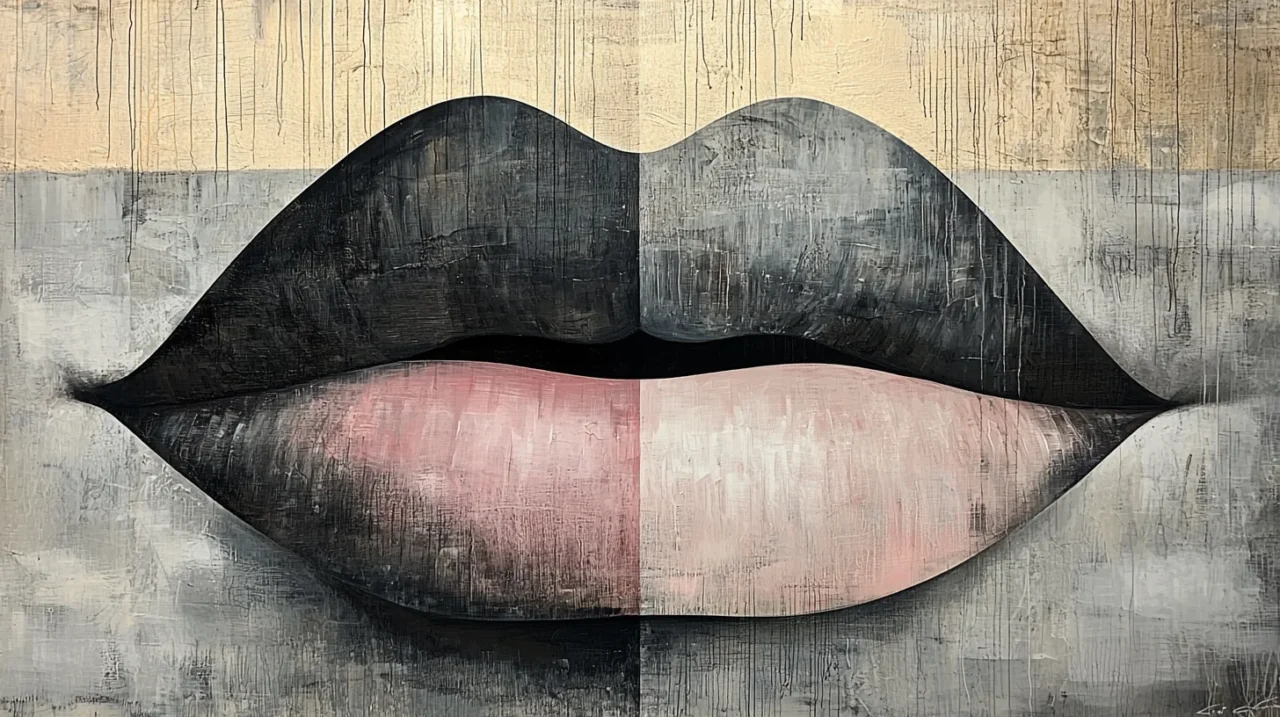
In the ceaseless churn of daily life, we rarely pause to question the scaffolding that holds our reality together. What is the nature of the world we inhabit? Is it merely a collection of physical objects, or does an unseen structure—woven from the threads of mind, causality, and essence—underlie it all? Metaphysics, the ancient and ever-evolving inquiry into the fundamental nature of being, compels us to confront these questions. It is not a sterile academic exercise but a profound journey into the heart of existence itself. Drawing on the towering insights of thinkers like Aristotle, Leibniz, and Kant, we can begin to map the hidden architecture of reality, peeling back the layers of the mundane to reveal the principles that govern everything from a grain of sand to the cosmos. Let us embark on this exploration, not as passive observers, but as active seekers of the ultimate truths that shape our world.
The quest begins with Aristotle, whose metaphysical framework laid the groundwork for Western philosophy. For Aristotle, reality is not a chaotic jumble but a system of substances—entities that exist in themselves and not merely as attributes of something else. A tree, for instance, is a substance, composed of matter (the wood and leaves) and form (the essence that makes it a tree and not a rock). His doctrine of the four causes—material, formal, efficient, and final—offers a lens through which we can dissect the "why" of existence. Why does a chair exist? Its material cause is the wood from which it is made; its formal cause is the design that shapes it into a chair; its efficient cause is the carpenter who crafts it; and its final cause is its purpose—to provide a seat. This causal structure is not merely descriptive but revelatory, suggesting that everything in the universe has an inherent telos, or purpose, driving its being. Yet, Aristotle's world is firmly rooted in the tangible; he rejects the notion of a separate realm of pure ideas, as posited by his teacher Plato. Instead, form and matter are inseparable, locked in a dynamic interplay that constitutes the physical world. This grounding in the concrete offers a starting point for metaphysical inquiry, but it leaves unanswered the deeper question: what lies beyond the physical? Is there a unifying principle that transcends the material, or are we bound to a reality of endless particulars? Aristotle』s system, while robust, feels incomplete in the face of such mysteries, pushing us to seek further.

Enter Gottfried Wilhelm Leibniz, the 17th-century rationalist whose metaphysical vision introduces a radical shift. Leibniz proposed that the fundamental units of reality are not physical substances but monads—simple, indivisible, and immaterial entities that contain within them the blueprint of the entire universe. Unlike Aristotle』s substances, which are tied to the sensory world, Leibniz』s monads exist in a realm of pure potentiality, each reflecting the whole of reality from its unique perspective, like countless mirrors capturing a single scene in infinite variations. This concept is dizzying: a monad, though windowless and isolated, perceives the universe through an internal principle pre-established by God, the ultimate monad who ensures the harmony of all things. Leibniz』s famous principle of sufficient reason—that everything must have a reason or cause for its existence—further anchors his system. Why does this world exist and not another? For Leibniz, it is because God, in His infinite wisdom, chose the "best of all possible worlds," a notion that Voltaire would later famously satirize but which nonetheless reveals Leibniz』s commitment to a rational, ordered cosmos. This metaphysical optimism stands in stark contrast to Aristotle』s earthbound realism, suggesting that reality is not merely what we see but a vast, interconnected web of spiritual essences. Yet, Leibniz』s reliance on divine preordination raises questions of free will and contingency. If every monad』s path is pre-established, are we truly agents in our reality, or merely actors in a cosmic script? This tension between determinism and autonomy haunts his system, urging us to probe deeper into the nature of causality and freedom.

Immanuel Kant, the 18th-century giant of philosophy, offers a seismic reorientation of metaphysical thought, one that shifts the focus from the external world to the structures of human cognition. In his "Critique of Pure Reason," Kant argues that we can never know reality as it is in itself—the noumenal realm—but only as it appears to us through the filters of our mind, the phenomenal realm. Space and time, for Kant, are not objective features of the universe but forms of human intuition, the necessary conditions through which we experience anything at all. Causality, too, is not a property of the world but a category of thought, a way our mind organizes sensory data into coherent patterns. This "Copernican turn" in philosophy is revolutionary: rather than our knowledge conforming to objects, objects conform to our knowledge. Kant thus divides reality into two domains: the unknowable "thing-in-itself" and the structured world of phenomena shaped by our mental apparatus. This framework resolves many of the tensions in earlier systems—Aristotle』s reliance on sensory experience and Leibniz』s speculative monads—by grounding metaphysics in the limits of human understanding. Yet, it also introduces a profound alienation: if reality as we know it is merely a construct of our mind, are we forever cut off from the true essence of being? Kant』s answer is both humbling and liberating. While we cannot penetrate the noumenal, we can achieve certainty within the phenomenal, crafting a metaphysics that is not speculative but critical, rooted in the conditions of possible experience. For Kant, metaphysics becomes less about uncovering the ultimate nature of the universe and more about understanding the boundaries of our grasp on it. This shift does not diminish the quest for truth but reframes it, reminding us that the architecture of reality may lie as much within us as without.

As we weave together these threads from Aristotle, Leibniz, and Kant, a complex tapestry of metaphysical thought emerges. Aristotle gives us a reality of substances, bound by form and purpose, rooted in the world we touch and see. Leibniz elevates us to a realm of spiritual monads, each a microcosm of the divine order, suggesting that reality is fundamentally rational and interconnected. Kant, in turn, pulls us back to ourselves, insisting that the structure of reality is inseparable from the structure of our minds, a product of how we perceive rather than what truly is. Each perspective offers a piece of the puzzle, yet none claims to hold the whole. Perhaps this is the deepest lesson of metaphysics: that reality, in its fullest sense, resists final definition. It is not a static edifice but a dynamic interplay of matter and mind, cause and effect, known and unknowable. The hidden architecture we seek is not a blueprint to be discovered but a question to be lived—a question that drives us to look beyond the surface of things, to interrogate the very foundations of existence.
This journey through metaphysical thought is not merely intellectual but existential. It challenges us to reconsider our place in the cosmos. Are we, as Aristotle might suggest, beings of matter and form, striving toward our natural ends? Are we, in Leibniz』s vision, monads reflecting a preordained harmony, each a spark of the divine? Or are we, as Kant proposes, architects of our own reality, shaping the world through the lens of our cognition? These questions do not admit easy answers, but they compel us to engage with reality on a deeper level, to see the ordinary as extraordinary, the mundane as mysterious. Metaphysics, at its core, is not about solving the riddle of existence but about learning to dwell in its mystery. It invites us to stand at the edge of the known and gaze into the infinite, to trace the contours of a reality that is both within us and beyond us. In this act of seeking, we do not merely study the architecture of being—we become part of it.