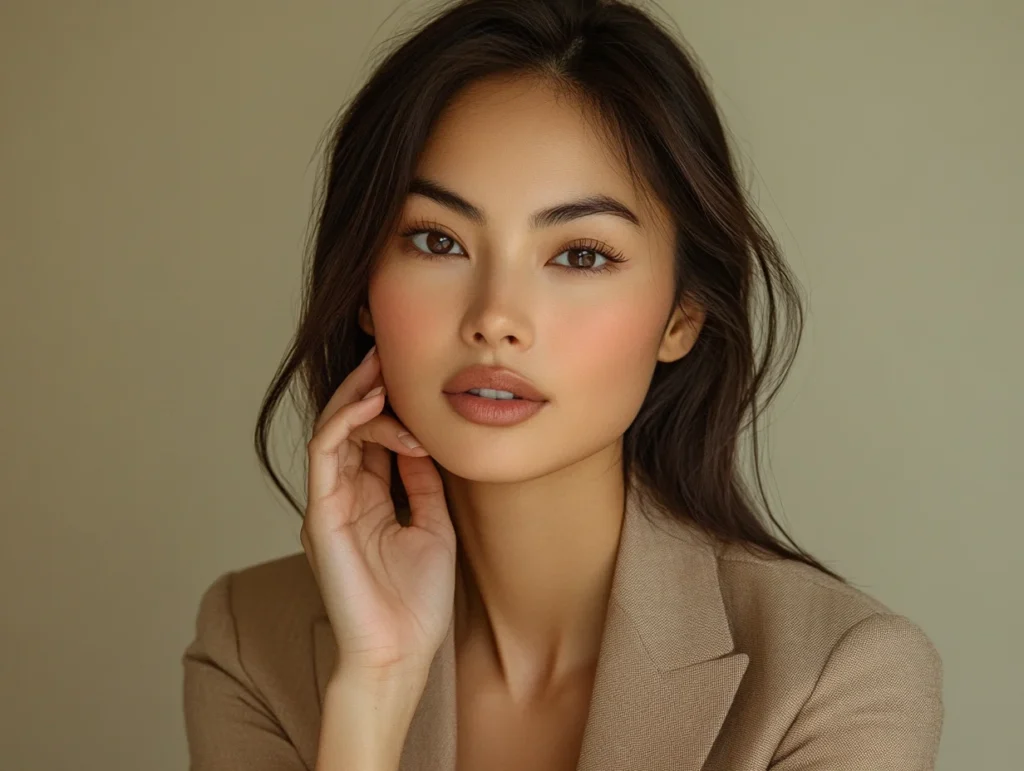
In the mirror, a reflection stares back—a canvas of self, painted with the hues of desire and doubt. Lips, the silent heralds of emotion, curve into a smile or tighten in restraint, speaking a language older than words. Today, they are more than mere anatomy; they are symbols, gateways to identity, and battlegrounds of inner conflict. In the realm of medical aesthetics, the pursuit of the perfect pout is not just a cosmetic whim—it is a profound dialogue between the external and the internal, a dance of vanity and vulnerability. What drives us to reshape these delicate contours? Is it merely the allure of beauty, or does something deeper, something unspoken, linger beneath the surface?
This is not a linear tale of transformation, nor a prescriptive guide to fuller lips. Instead, let us wander through a mosaic of fragmented thoughts, cultural echoes, and psychological undercurrents that shape our obsession with lip aesthetics. As we navigate this labyrinth, we uncover not just the 「why」 behind our choices, but the 「who」—the fragmented selves we seek to reconcile through every injection, every enhancement.
The Mirror as a Portal: Lips and Self-Perception
Lips are not neutral. They are the first to betray a trembling heart, the first to signal confidence or hesitation. In the psychological framework of self-perception, they occupy a liminal space—neither fully hidden nor fully exposed, yet impossibly intimate. Studies in evolutionary psychology suggest that full, well-defined lips are often associated with youth, fertility, and vitality, signaling genetic fitness to potential mates. But this biological lens is only one shard of the shattered mirror. Beyond instinct lies culture, personal history, and the weight of societal gaze.
Consider the modern obsession with the 「Kylie Jenner effect」—a cultural phenomenon where lip fillers became a rite of passage for a generation seeking to emulate a curated ideal. This is not mere mimicry; it is a psychological act of alignment, a desperate bid to belong. Social comparison theory posits that we evaluate ourselves against others, often through the distorted lens of social media, where perfection is not just attainable but expected. Yet, in plumping our lips to match an influencer』s pout, are we enhancing ourselves, or erasing the jagged edges of our individuality?
I recall a client, let』s call her Mara, who sat in the consultation room with a photo of a celebrity』s lips pinned to her vision board. 「I want to feel powerful,」 she said, her voice a mix of defiance and fragility. But as we spoke, it became clear that her desire wasn』t just about aesthetics—it was about reclaiming a narrative. After years of being overlooked, of feeling invisible in boardrooms and bedrooms, she saw her lips as a megaphone for her silenced voice. This is where the psychological dimension of lip enhancement reveals itself: it is not just about looking better, but about feeling seen.
The Cultural Script: Lips as Symbols of Desire and Power
If we deconstruct the cultural script, lips emerge as potent symbols, woven into the fabric of art, mythology, and media. From the crimson-painted mouths of ancient Egyptian queens to the seductive pouts of Hollywood sirens, lips have long been signifiers of sensuality and authority. In the 20th century, psychoanalyst Sigmund Freud might have argued that our fixation on lips is rooted in the oral stage of development—a primal longing for nurture and connection. But in today』s hyper-visual world, the narrative has shifted. Lips are no longer just objects of desire; they are tools of agency.
Take, for instance, the feminist reclamation of bold lipstick in the 1920s, when suffragettes painted their lips red as a defiant act against patriarchal norms. Fast forward to the present, and lip fillers can be read through a similar lens—a choice to sculpt one』s body as an act of empowerment. Yet, this empowerment is a double-edged sword. Feminist scholars like Naomi Wolf warn of the 「beauty myth,」 where women are conditioned to equate worth with appearance, trapped in a cycle of endless modification. When a woman opts for lip augmentation, is she defying the male gaze, or conforming to it? The answer is rarely singular; it is a collage of personal intent and societal pressure, layered like the gloss she applies each morning.
In my practice, I』ve encountered countless stories that blur these lines. A young artist sought fillers not for beauty, but for rebellion—her lips, she said, were her canvas, a protest against a family that deemed her 「too plain」 for creativity. Another client, a corporate executive, admitted that her enhanced lips were her armor, a way to command attention in a male-dominated industry where softness is mistaken for weakness. These fragmented narratives remind us that lip aesthetics are not a monolith; they are a kaleidoscope of motives, each reflecting a unique psychological landscape.
The Inner Conflict: Vanity or Validation?
At the heart of every med-aesthetic decision lies a tension—a push and pull between vanity and validation. The Diagnostic and Statistical Manual of Mental Disorders (DSM-5) recognizes Body Dysmorphic Disorder (BDD) as a condition where individuals fixate on perceived flaws, often seeking cosmetic interventions as a salve for deeper wounds. While not every client who desires lip fillers struggles with BDD, the psychological overlap is undeniable. Lips, as focal points of the face, become lightning rods for insecurity. A 2019 study published in the Journal of Cosmetic Dermatology found that nearly 30% of patients seeking facial fillers reported dissatisfaction with their appearance as a primary motivator, often tied to low self-esteem or past trauma.
But let us not pathologize desire. To want fuller lips is not inherently disordered; it can be an act of self-expression, akin to choosing a bold haircut or a piercing. The key lies in the 「why.」 Psychotherapist Esther Perel argues that beauty rituals are often less about aesthetics and more about storytelling—about crafting a version of ourselves that feels authentic, even if that authenticity is constructed. When a client opts for lip enhancement, they are not just altering tissue; they are rewriting their internal narrative, hoping to align the outer self with the inner vision.
Yet, this alignment is elusive. I』ve seen clients leave the clinic with plumper lips but emptier hearts, realizing that no syringe can fill the void of unaddressed pain. One woman, after years of fillers, confided, 「I thought bigger lips would make me love myself, but I still hear my mother』s voice calling me plain.」 Her story is a fractured mirror, reflecting a truth we often evade: external change, without internal reckoning, is a hollow victory.
The Ethics of Transformation: A Practitioner』s Dilemma
As a medical aesthetician, I stand at the crossroads of science and psyche, wielding tools that can sculpt flesh but not soul. The American Society of Plastic Surgeons emphasizes informed consent, ensuring clients understand risks and outcomes. But what of emotional risks? Should we probe deeper into a client』s motives, or respect their autonomy, even if their desires seem rooted in distress? This ethical fragmentation haunts every consultation. I can inject hyaluronic acid into lips, but I cannot inject self-worth into a heart.
Psychological research offers some guidance. A 2021 study in Aesthetic Surgery Journal suggests that pre-procedure counseling, focusing on expectations and self-image, can mitigate dissatisfaction. In my practice, I』ve adopted this approach, asking clients not just what they want, but why. Often, the conversation veers into uncharted territory—childhood taunts, failed relationships, the weight of Instagram』s endless scroll. These are not my domains as a clinician, yet they are inseparable from the lips I』m asked to reshape.
Towards a Synthesis: Beauty as a Bridge to Self
If we piece together these fragments—the evolutionary, the cultural, the personal—what emerges is not a verdict on lip enhancement, but a question: Can beauty be a bridge rather than a barrier? In the postmodern psyche, where identity is fluid and fragmented, med-aesthetic choices like lip fillers are neither good nor bad; they are texts to be read, stories to be unpacked. They reflect our longing to be seen, to be whole, even as they reveal the impossibility of that wholeness.
Perhaps the pursuit of the perfect pout is less about perfection and more about process—a journey inward, disguised as a journey outward. As psychologist Carl Jung might suggest, the shadow self—those parts of us we hide or reject—often surfaces in our quest for beauty. Lips, as the threshold of expression, become the stage where this shadow plays out. To enhance them can be an act of integration, a way to embrace rather than erase our contradictions.
In the end, the mirror is not a destination but a portal. It invites us to look beyond the surface, to ask not just how we appear, but who we are becoming. For every client who seeks fuller lips, there is a story—a collage of desire, doubt, and discovery. And for every practitioner, there is a responsibility to honor that story, to wield the needle not just with precision, but with compassion. In this fragmented dance of outer change and inner truth, perhaps the perfect pout is not the goal, but the question it dares us to ask: What do I truly seek, and will I find it here, in the curve of my own reflection?