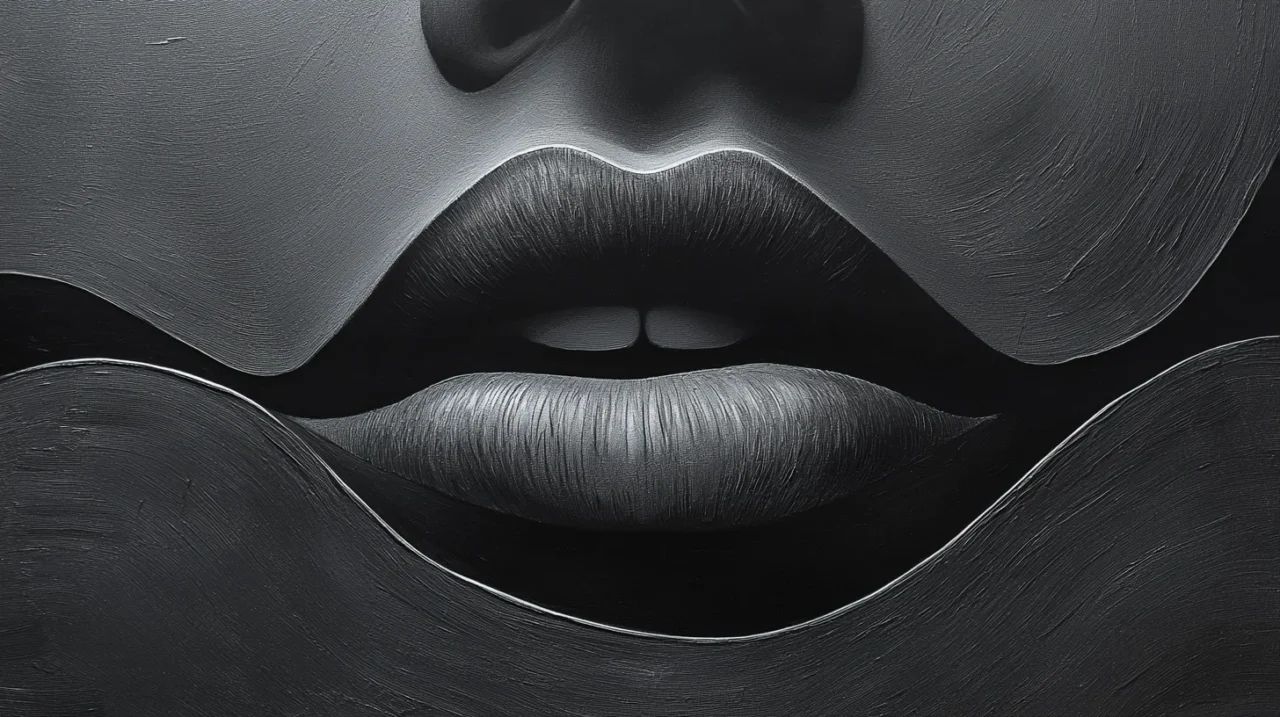
Most practitioners approach lip injection as a mechanical exercise in volume replacement. They measure, they inject, they assess symmetry on a screen. Yet the patients who return dissatisfied do not complain about milliliters or needle placement. They speak of a face that no longer feels like their own, of expressions that have flattened, of a mouth that now broadcasts a personality they never chose. The discrepancy arises because the procedure is treated as augmentation rather than design, and design, when it touches the mouth, inevitably touches the psychology of how a person presents an inner self to the world.
Lips occupy a peculiar position in facial perception. They are the only soft-tissue feature that moves continuously during speech and emotion, yet they must also remain legible at rest. Evolutionary psychologists have long noted that fuller lips correlate with perceived fertility and youth, but the correlation is not linear. Beyond a certain threshold, additional volume begins to signal sexual availability rather than vitality, shifting the viewer’s inference from health to intention. A skilled designer therefore works with two overlapping maps: the anatomical geometry of the lip itself and the psychological geometry of how that lip will be read by others and, crucially, by the patient when she catches her reflection in an unguarded moment.

The golden ratio is frequently invoked as an objective standard. In practice it functions more as a useful starting hypothesis than a destination. The ratio suggests that the lower lip should occupy roughly 1.6 times the height of the upper lip in repose, with the upper lip showing a gentle double curve and the lower lip a single, fuller arc. These proportions produce immediate visual harmony because they align with the way the visual cortex processes curvature and contrast. Yet harmony is not identity. A patient whose philtrum is short and whose dental show is already generous may find the textbook ratio visually aggressive; the same measurements applied to a longer midface can appear underdone. The designer’s first psychological task is therefore to determine whether the patient seeks to correct a perceived deficit or to amplify an existing signal. The former requires restraint; the latter requires precision in deciding which signal to amplify.
Consider the difference between patients who request “Russian lips” and those who request “natural enhancement.” The former often articulate a desire for a specific social signal: a look that reads as deliberately constructed, almost architectural. The latter usually describe an absence—they want to stop looking tired or angry, not to announce that they have had work done. These two requests engage different defensive mechanisms. The patient seeking overt construction is often defending against an internal narrative of invisibility; she wants the mouth to become a focal point that overrides other facial cues. The patient seeking camouflage is defending against an internal narrative of decline; she wants the mouth to disappear back into the overall harmony of the face. Effective design begins by locating which narrative is active.

Once the narrative is identified, the technical choices follow from psychological rather than purely volumetric logic. The upper lip’s white roll, for instance, is not merely an anatomical landmark but a boundary that separates the cutaneous lip from the vermilion. Overfilling across this boundary erases a micro-shadow that the eye uses to register depth. The result is not simply an oversized lip but a lip that appears pasted onto the face rather than emerging from it. Patients frequently report that their new lips “don’t move right” precisely because this shadow has been lost; the psychological experience of alienation follows the optical flattening.
Personalization therefore requires mapping not only static proportions but dynamic behavior. During consultation, observe how the lips move when the patient smiles, when she pronounces plosives, when she is silent but attentive. A patient whose orbicularis oris is hypertonic will tend to roll the upper lip inward; additional volume placed in the dry vermilion will simply accentuate the inversion rather than create eversion. In such cases the design decision is not to add volume but to reduce muscular pull, either through targeted neurotoxin or by placing support at the oral commissures so that the lip can rest in a slightly everted position without fighting its own muscle tone.

The most sophisticated designs also account for the patient’s relationship to her own image over time. A twenty-eight-year-old may tolerate a result that reads as conspicuously full because her social context rewards overt signals of youth. The same proportions on a forty-five-year-old can trigger a different psychological response: the patient may intellectually accept the volume yet unconsciously register the mouth as belonging to a different age cohort, producing a subtle but persistent sense of mismatch. The designer’s responsibility is not to refuse the request but to make the temporal implication explicit, allowing the patient to choose whether she wants her lips to match her chronological face or to propose an alternative age narrative.
Ultimately, lip injection succeeds when the resulting morphology supports rather than overrides the patient’s existing facial syntax. The golden ratio offers a shared visual language, yet every face already possesses its own grammar. The art lies in deciding which existing rules to honor and which to bend, always with the recognition that the mouth is the feature through which the patient most directly enacts her intentions toward the world. When that enactment remains coherent with her internal sense of self, the injection disappears from view and becomes simply the way her face happens to look. When it does not, no amount of additional product will restore the missing alignment.