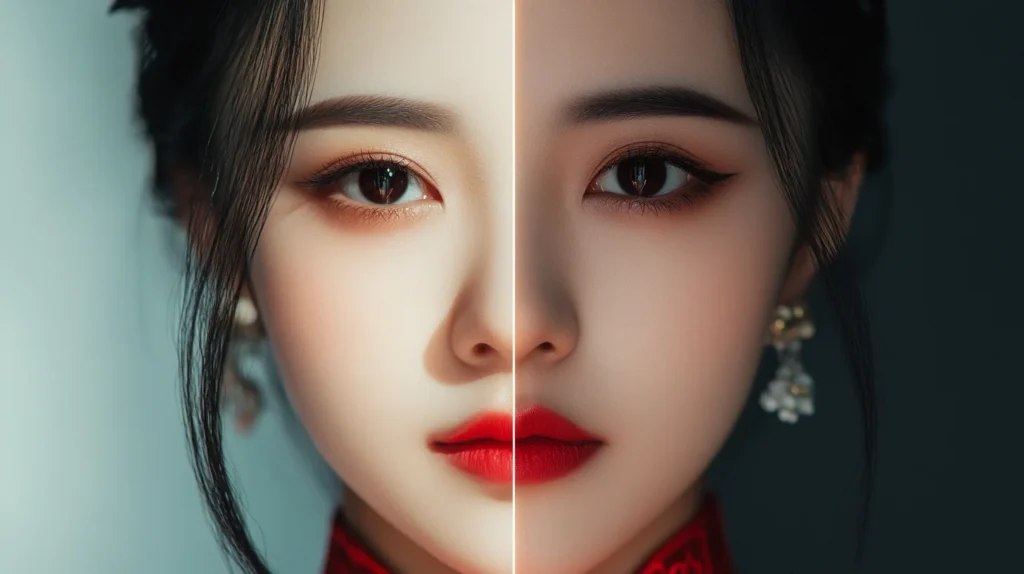
In the sprawling ecosystem of modern innovation, aesthetic medicine—often called “medtech” when fused with cutting-edge technology—stands as a vibrant meadow where diverse technological species converge. Picture this: artificial intelligence (AI) as the pollinator, darting between blooms of data to extract patterns; robotics as the sturdy roots, anchoring precision into every procedure; and human expertise as the sunlight, guiding these tools with intent and care. Together, they form a symbiotic network that is redefining beauty, safety, and efficiency in ways unimaginable a decade ago. This is the story of how technology fusion is not just enhancing aesthetic medicine but rewriting its very DNA, creating solutions that are as much about health as they are about art.
The Fertile Ground of Aesthetic Medicine
Aesthetic medicine, once a field dominated by manual skill and subjective artistry, has become a fertile ground for technological integration. The global market for medical aesthetics is projected to surpass $18 billion by 2025, driven by rising demand for non-invasive procedures like Botox, fillers, and laser treatments. Yet, beneath this growth lies a deeper challenge: the need for precision, consistency, and personalized outcomes in an industry where every face, every body, is a unique canvas.
Enter the era of technical fusion. Unlike siloed advancements where one technology operates in isolation, fusion is about cross-pollination. It’s the interplay of AI’s predictive algorithms with robotics’ mechanical precision, augmented by IoT (Internet of Things) for real-time data sharing, and grounded in human oversight. This ecosystem doesn’t just solve problems—it anticipates them, adapts to them, and scales them across diverse patient needs. Let’s explore how this convergence is unfolding, layer by layer, in the medtech landscape.

AI as the Pollinator: Predicting Beauty with Data
At the heart of this technological ecosystem is artificial intelligence, a pollinator that gathers data from countless sources—patient histories, imaging scans, even social media trends—to predict and personalize aesthetic outcomes. AI is no longer just a buzzword in medtech; it’s a transformative force. For instance, companies like MirrorMe3D use AI to create 3D simulations of post-procedure results for rhinoplasty or facelifts, allowing patients to “see” their future selves before a single incision is made. These simulations aren’t mere guesses; they’re built on machine learning models trained on thousands of facial structures, adjusting for variables like skin elasticity and bone density.
But AI’s role extends beyond visualization. It’s also reshaping diagnostics. Take the example of skin analysis tools powered by deep learning. Platforms like SkinVision can analyze moles and lesions through smartphone images, flagging potential melanomas with accuracy rates rivaling dermatologists (up to 95% in some studies). In aesthetic clinics, similar AI systems assess skin conditions to recommend tailored treatments—whether it’s laser resurfacing for acne scars or chemical peels for hyperpigmentation—reducing guesswork and enhancing outcomes.
The beauty of AI in this context isn’t just its precision but its adaptability. It learns from each patient interaction, cross-referencing global datasets to refine its predictions. Yet, like any pollinator, AI needs a structure to ground its insights. This is where robotics enters the ecosystem, acting as the roots that stabilize and execute.
Robotics as the Roots: Precision in Every Movement
If AI is the brain of medtech fusion, robotics is the hands. Robotic systems in aesthetic medicine are no longer science fiction; they’re a reality in clinics worldwide. Consider the ARTAS iX system, a robotic hair transplant technology that uses AI-driven imaging to identify and extract individual hair follicles with sub-millimeter accuracy. Unlike manual extraction, which can damage surrounding tissue, ARTAS ensures consistency, reducing recovery time and improving graft survival rates by up to 90%.

Robotics also shines in minimally invasive procedures. The da Vinci Surgical System, originally designed for complex surgeries, has been adapted for cosmetic applications like facial reconstruction. Its robotic arms, controlled by surgeons, offer a range of motion and precision that human hands can’t replicate, minimizing scarring and accelerating healing. In a field where millimeters matter—whether it’s the angle of a Botox injection or the depth of a laser cut—robotics provides a level of control that elevates outcomes from good to exceptional.
But robotics isn’t just about execution; it’s about collaboration. When paired with AI, these systems become predictive tools. For example, during a procedure, AI can analyze real-time data (like tissue resistance or blood flow) and adjust the robotic arm’s movements on the fly. This fusion creates a feedback loop where technology and human oversight intertwine, ensuring safety and artistry coexist.
IoT as the Vines: Connecting the Ecosystem
No ecosystem thrives in isolation, and in medtech, the Internet of Things (IoT) acts as the vines that connect every element. IoT devices—wearables, smart mirrors, even clinic management systems—create a network of data exchange that enhances both patient experience and operational efficiency. Imagine a patient wearing a smart skin sensor post-treatment; the device monitors healing, detects inflammation, and sends alerts to both the patient and clinician via a cloud-based app. This isn’t a futuristic fantasy—it’s already happening with tools like the L’Oréal My Skin Track UV, which tracks skin exposure and hydration levels.
In clinics, IoT streamlines workflows. Smart scheduling systems integrate with patient records and equipment availability, ensuring procedures are timed for maximum efficiency. Post-treatment, IoT-enabled devices track patient progress, feeding data back to AI models for continuous improvement. This interconnectedness ensures that every touchpoint in the aesthetic journey—from consultation to recovery—is optimized, creating a seamless experience that feels almost organic.

Human Expertise as the Sunlight: Guiding the Fusion
Technology, no matter how advanced, cannot replace the human element in aesthetic medicine. Surgeons, dermatologists, and aestheticians are the sunlight in this ecosystem, providing the warmth of judgment, empathy, and creativity that no algorithm can replicate. A robotic arm may execute a flawless injection, but it’s the clinician who decides where and why. AI may predict a patient’s ideal nose shape, but it’s the surgeon’s understanding of cultural beauty standards and personal desires that shapes the final result.
This human-tech symbiosis is where fusion truly shines. During a complex procedure like a thread lift, a surgeon might use AI to map tension points on the face, rely on robotics for precise thread insertion, and leverage IoT to monitor post-op swelling—all while making real-time decisions based on years of experience. The result? A procedure that’s safer, faster, and more tailored than ever before.
Challenges in the Ecosystem: Navigating Overgrowth
No ecosystem is without its predators and challenges. As medtech fusion grows, so do concerns about data privacy, ethical boundaries, and accessibility. AI systems rely on vast datasets, often including sensitive patient information. A breach could erode trust, a currency more valuable than any technology. Regulatory bodies like the FDA and EU’s MDR (Medical Device Regulation) are scrambling to keep pace, imposing strict guidelines on AI and robotic tools to ensure safety—but these rules can also stifle innovation if overly rigid.
Then there’s the question of equity. Cutting-edge technologies like ARTAS or da Vinci systems come with hefty price tags, often limiting their use to high-end clinics in affluent regions. If medtech fusion is to truly transform aesthetic medicine, it must evolve beyond elite circles, adapting to diverse economic landscapes through scalable, cost-effective solutions.

Finally, there’s the risk of over-reliance on technology. A surgeon overly dependent on AI predictions might overlook subtle cues—like a patient’s emotional readiness for a procedure—that no dataset can capture. Balancing tech with human intuition is not just a challenge; it’s a necessity for sustainable growth in this field.
The Future Bloom: What Lies Ahead
As we peer into the horizon of this medtech ecosystem, the potential for further fusion is staggering. Imagine augmented reality (AR) headsets that overlay AI-generated treatment maps during live procedures, or nanotechnology delivering fillers at a cellular level with robotic precision. These aren’t distant dreams; they’re already in early development stages at institutions like MIT’s Media Lab and companies like Allergan.
Moreover, the democratization of technology could reshape the landscape. Open-source AI models for skin analysis or 3D printing of affordable robotic tools could bring medtech fusion to smaller clinics and underserved regions. The ecosystem is poised to expand, not just in scope but in inclusivity, ensuring that beauty—and the health it often reflects—is accessible to all.
A Thriving Symbiosis
In the meadow of aesthetic medicine, technology fusion is not a mere trend; it’s a thriving symbiosis that mirrors nature itself. AI pollinates with insights, robotics roots with precision, IoT connects with seamless vines, and human expertise shines as the guiding light. Together, they create a system where innovation doesn’t just solve problems—it anticipates needs, personalizes care, and redefines what’s possible.
For practitioners, embracing this fusion means staying ahead of the curve, learning to wield these tools with the same artistry they’ve always applied to their craft. For patients, it means safer, more predictable outcomes in a field once fraught with uncertainty. And for the industry as a whole, it signals a new era—one where technology and humanity converge to create beauty that’s as much about science as it is about soul. As this ecosystem evolves, one thing is clear: the future of aesthetic medicine isn’t just bright; it’s blooming.