
In a world saturated with fleeting digital images and disposable content, visual art remains a timeless anchor—a medium that distills the chaos of human experience into something tangible, something eternal. A painting isn’t just pigment on canvas; it’s a conversation between the artist’s inner world and the viewer’s perception. A sculpture isn’t merely stone or metal; it’s a frozen moment of emotion, begging to be felt. Visual art, as a cornerstone of aesthetic expression, transcends language and culture, speaking directly to the soul. But how does it do this? How do brushstrokes, shapes, and shadows evoke such profound reactions? Let’s unravel this mystery by wandering through the labyrinth of artistic creation, from the raw mechanics of technique to the intangible alchemy of emotion.
The Mechanics of Meaning: Technique as a Silent Storyteller
At its core, visual art is a craft. Before emotion or philosophy can emerge, there is the painstaking mastery of tools and materials. Consider the Renaissance masters—Leonardo da Vinci, for instance, whose Mona Lisa continues to captivate with its enigmatic smile. What many overlook is the technical precision behind that mystery. Leonardo’s use of sfumato, a technique that softens edges and transitions between colors, creates an almost ethereal quality. The lack of harsh lines mimics the way light falls on human skin, making the subject feel alive, as if she might shift her gaze at any moment. This isn’t just painting; it’s an optical illusion born from relentless experimentation.
Fast forward to the 20th century, and we see artists like Jackson Pollock redefining technique altogether. His drip paintings, often dismissed as chaotic splatters, are anything but random. Pollock’s method involved a deep understanding of rhythm and movement—his entire body became the brush, dancing across the canvas. The result? A visual representation of energy, anxiety, and the subconscious. Technique, whether meticulously controlled or wildly expressive, is the artist’s first language. It’s the grammar through which emotion and thought are structured.
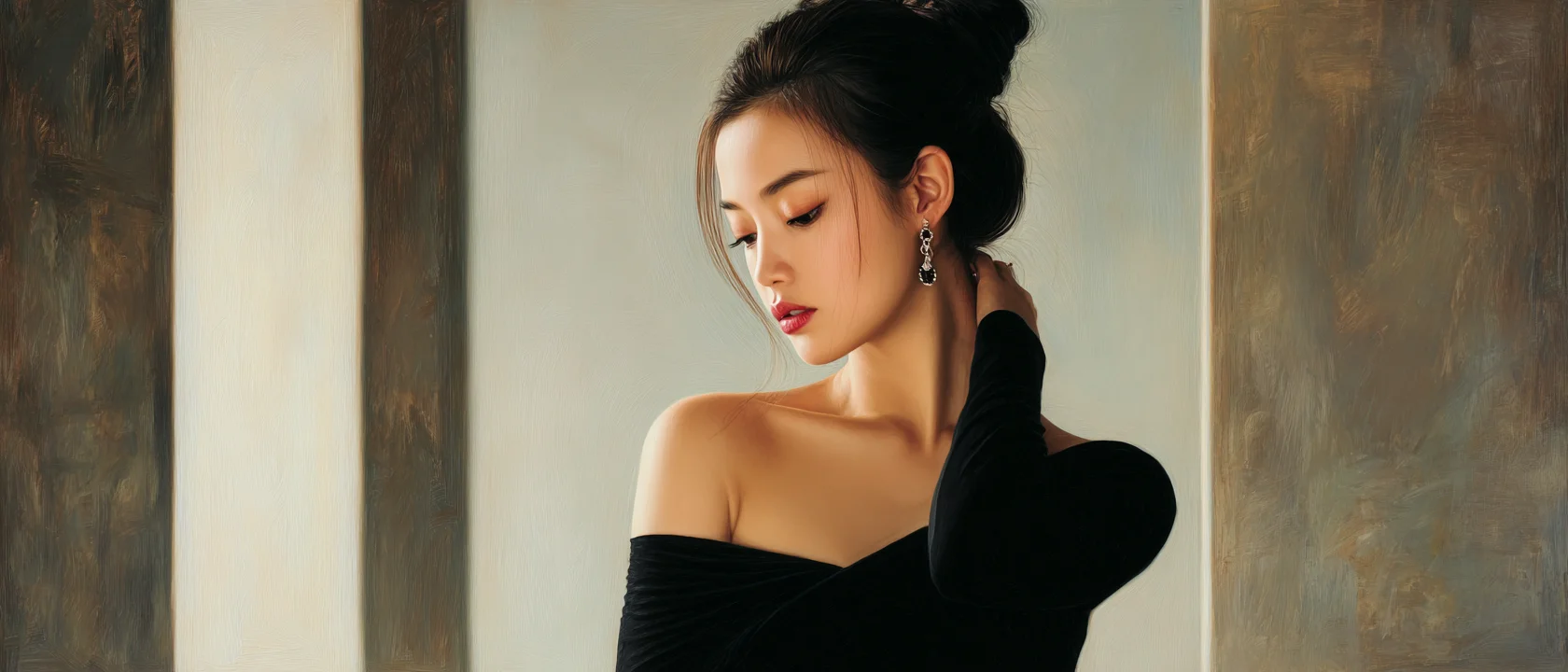
But technique alone isn’t enough. A perfectly executed painting can still feel hollow if it lacks intent. This brings us to the heart of visual art: its ability to encode meaning in ways that defy words.
The Emotional Canvas: Art as a Mirror to the Mind
Visual art doesn’t just depict; it resonates. It’s a mirror held up to our innermost fears, desires, and questions. Take Edvard Munch’s The Scream, a work that has become synonymous with existential dread. The swirling, fiery sky, the ghostly figure clutching its face—these elements aren’t just visual choices; they’re emotional triggers. Munch didn’t paint a person screaming; he painted the sensation of being overwhelmed by the infinite, the terror of isolation. He once wrote in his diary, “I felt the great scream in nature.” That raw, visceral feeling is what viewers connect with, even a century later.
This emotional resonance isn’t limited to painting. Photography, often seen as a more “objective” medium, can be just as evocative. Consider Dorothea Lange’s iconic image Migrant Mother from the Great Depression. The photograph captures a woman staring into the distance, her face etched with worry, her children clinging to her. There’s no color, no movement, yet the image screams of hardship and resilience. Lange’s framing—the tight crop, the focus on the woman’s expression—amplifies the emotional weight. It’s not just a picture; it’s a plea for empathy.
What’s fascinating is how these emotional undercurrents shift depending on the viewer. A sculpture like Auguste Rodin’s The Thinker might inspire introspection in one person and melancholy in another. Art’s power lies in its ambiguity—it invites us to project our own stories onto it. This interplay between artist and audience is what makes visual art a living, breathing dialogue.

The Cultural Lens: Art as a Reflection of Society
If art mirrors the individual soul, it also reflects the collective consciousness of its time. Every era has its visual signature, shaped by the social, political, and technological currents of the day. The opulent, gilded frames of Baroque art, for instance, speak to the wealth and religious fervor of 17th-century Europe. Paintings by Caravaggio, with their dramatic chiaroscuro (the interplay of light and shadow), don’t just depict biblical scenes; they dramatize the tension between faith and doubt, a central struggle of the Counter-Reformation.
Contrast this with the fragmented, disjointed forms of Cubism in the early 20th century. Artists like Pablo Picasso and Georges Braque weren’t just playing with perspective; they were responding to a world fractured by war and industrialization. Picasso’s Guernica, with its distorted figures and monochromatic palette, is a visceral condemnation of the horrors of the Spanish Civil War. The painting doesn’t narrate the event—it embodies the chaos and suffering. Visual art, in this sense, becomes a historical document, a way to decode the zeitgeist of a particular moment.
Today, visual art continues to grapple with contemporary issues. Street artists like Banksy use public spaces as their canvas, blending humor and critique to address topics like consumerism, war, and inequality. A stencil of a child holding a balloon shaped like a heart isn’t just a pretty image; it’s a commentary on innocence amidst violence. The accessibility of street art—free from the elitism of galleries—democratizes aesthetic expression, reminding us that art isn’t just for the few; it’s for the many.

The Artist’s Mind: A Case Study in Creative Tension
To truly understand visual art, we must peek into the minds of those who create it. Let’s consider Frida Kahlo, whose deeply personal works continue to inspire. Kahlo’s paintings are often raw, unflinching explorations of pain—both physical and emotional. In The Two Fridas, she depicts herself twice, one dressed in traditional Mexican attire, the other in a European-style dress, their hearts connected by a single vein. The duality isn’t just visual; it’s a manifestation of her struggle with identity, torn between her heritage and the influence of her husband, Diego Rivera. Kahlo’s art is a masterclass in vulnerability—her brushstrokes don’t hide her wounds; they celebrate them.
What’s striking about Kahlo, and many artists like her, is the tension between creation and destruction. Art often emerges from conflict—whether it’s personal trauma, societal upheaval, or the sheer frustration of translating vision into form. This tension is what fuels innovation. When we look at a piece of art, we’re not just seeing the final product; we’re witnessing the residue of a battle fought on canvas, in stone, or through a lens.
The Viewer’s Role: Completing the Artistic Circuit
Art isn’t complete until it’s seen. The viewer is the final piece of the puzzle, the one who breathes life into static forms. This is why a painting can feel different each time you look at it—your mood, your experiences, even the lighting in the room shape your interpretation. Visual art thrives on this subjectivity. A photograph by Ansel Adams, with its stark, majestic landscapes, might evoke awe in one moment and loneliness in another. The image hasn’t changed; you have.

This dynamic also explains why art can be polarizing. Abstract expressionism, for example, often leaves viewers baffled. A canvas covered in seemingly random lines and colors—how can this be “art”? Yet, for those willing to engage, works by Mark Rothko or Wassily Kandinsky offer a meditative experience. Rothko’s massive color fields aren’t meant to represent anything concrete; they’re meant to envelop you, to stir something primal. The meaning isn’t handed to you; it’s something you must excavate.
Beyond the Frame: The Future of Visual Art
As we stand at the intersection of tradition and technology, visual art is evolving in ways we couldn’t have imagined a century ago. Digital art, augmented reality, and AI-generated works are pushing the boundaries of what we consider “art.” Beeple’s digital collage EVERYDAYS: The First 5000 Days sold for $69 million at auction, signaling a seismic shift in how value is assigned to art. Yet, even in this pixelated frontier, the core of visual art remains unchanged: it’s about expression, connection, and provocation.
At the same time, the democratization of tools—think Instagram filters or accessible design software—means more people than ever can create and share their vision. This raises questions about authenticity and originality. Is a digitally enhanced photograph less “real” than a traditional painting? Does the ease of creation diminish the artist’s struggle? These debates are healthy; they remind us that art isn’t static. It’s a living organism, adapting to the pulse of humanity.
A Final Stroke: Why Visual Art Matters
Visual art isn’t a luxury; it’s a necessity. It’s how we make sense of the incomprehensible, how we bridge the gap between the individual and the universal. From the meticulous realism of the Renaissance to the raw abstraction of modernity, every stroke, every frame, every carved line carries a piece of the human story. It challenges us to see—not just with our eyes, but with our hearts.

So, the next time you stand before a painting, linger a little longer. Notice the texture of the brushstrokes, the weight of the shadows, the silence between the shapes. Ask yourself: What is this piece trying to say? And more importantly, what is it saying to you? In that quiet exchange, you’ll find the true magic of visual art—a language without words, a story without end.